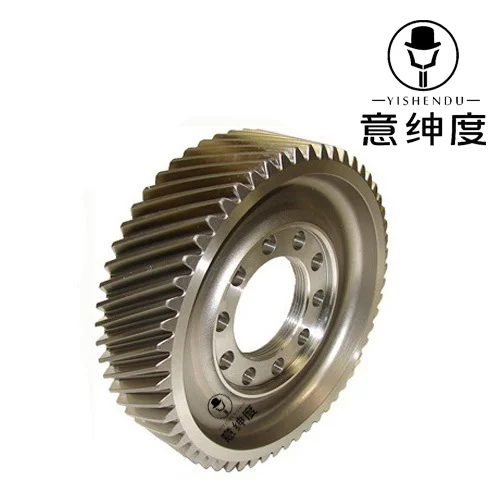
Product Details
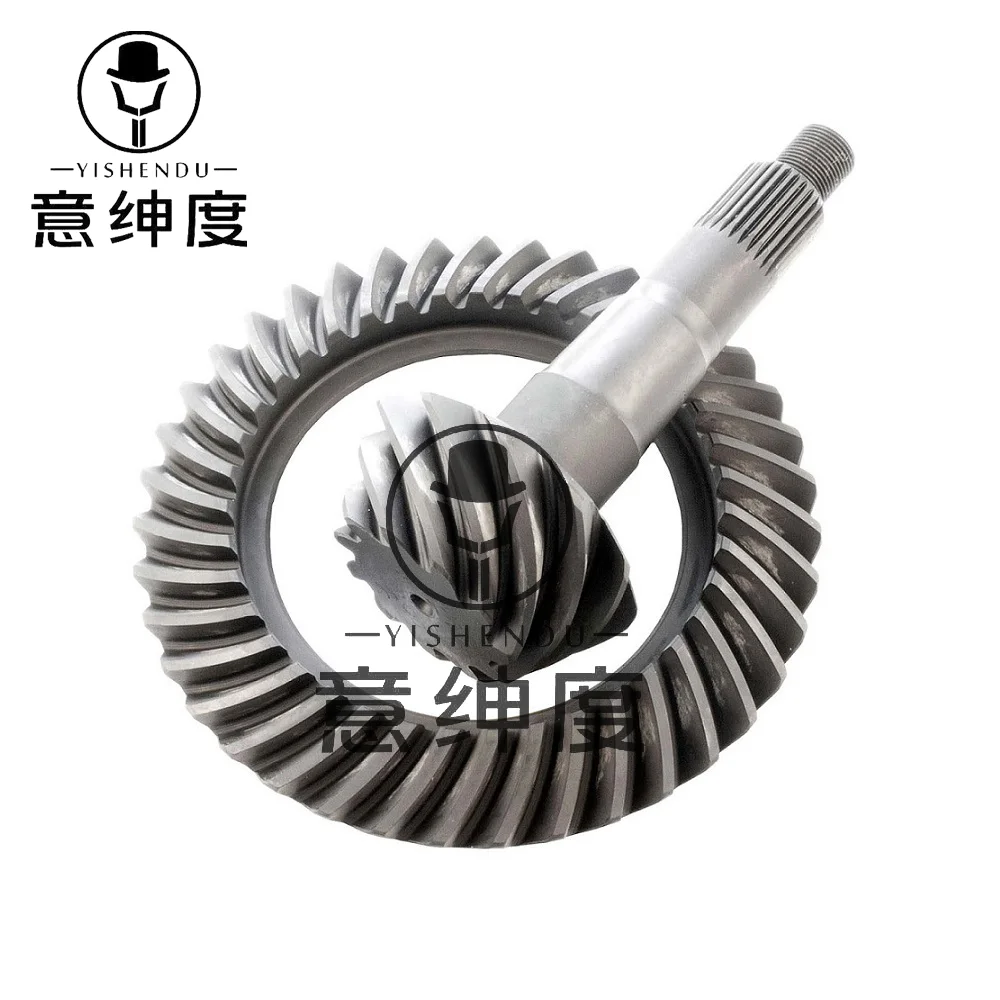
Bevel Gears are gears where the axes of the two shafts intersect and the tooth-bearing faces of the gears themselves are conically shaped. Bevel gears are most often mounted on shafts that are 90 degrees apart, but can be designed to work at other angles as well. The pitch surface of bevel gears is a cone, known as a pitch cone. Bevel gears transfer the energy from linear to vertical power, making it very useful in machines widely used in mechanical settings. Bevel gears are generally more costly and are not able to transmit as much torque, per size, as a parallel shaft arrangement.
The teeth on bevel gears can be straight, spiral or zerol.
In Straight Bevel Gears, the teeth are straight and parallel to the generators of the cone. This is the simplest form of bevel gear. It resembles a spur gear, only conical rather than cylindrical. In straight bevel gear sets, when each tooth engages, it impacts the corresponding tooth and simply curving the gear teeth can solve the problem.
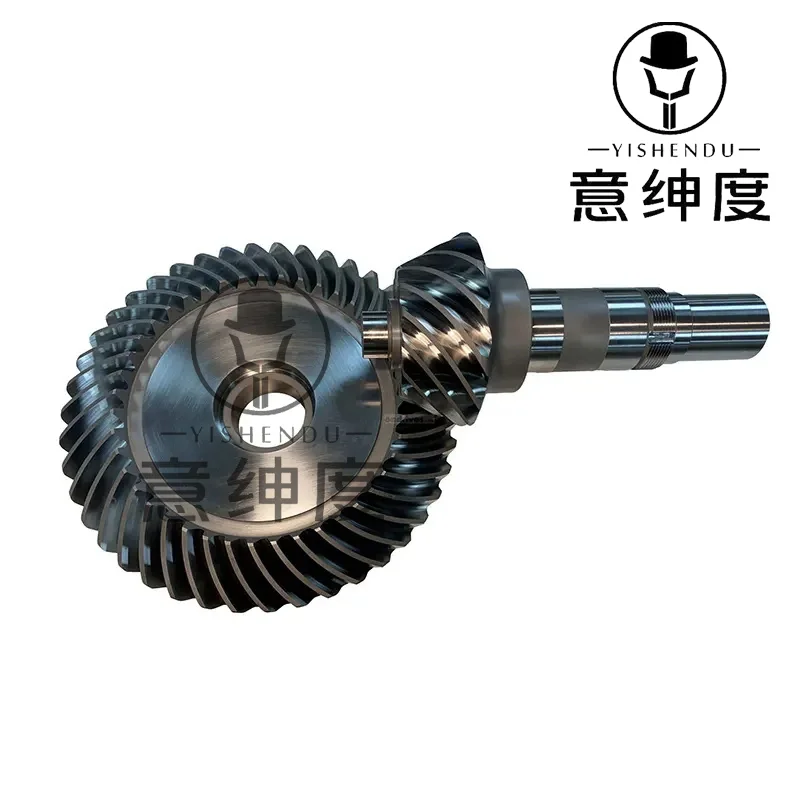
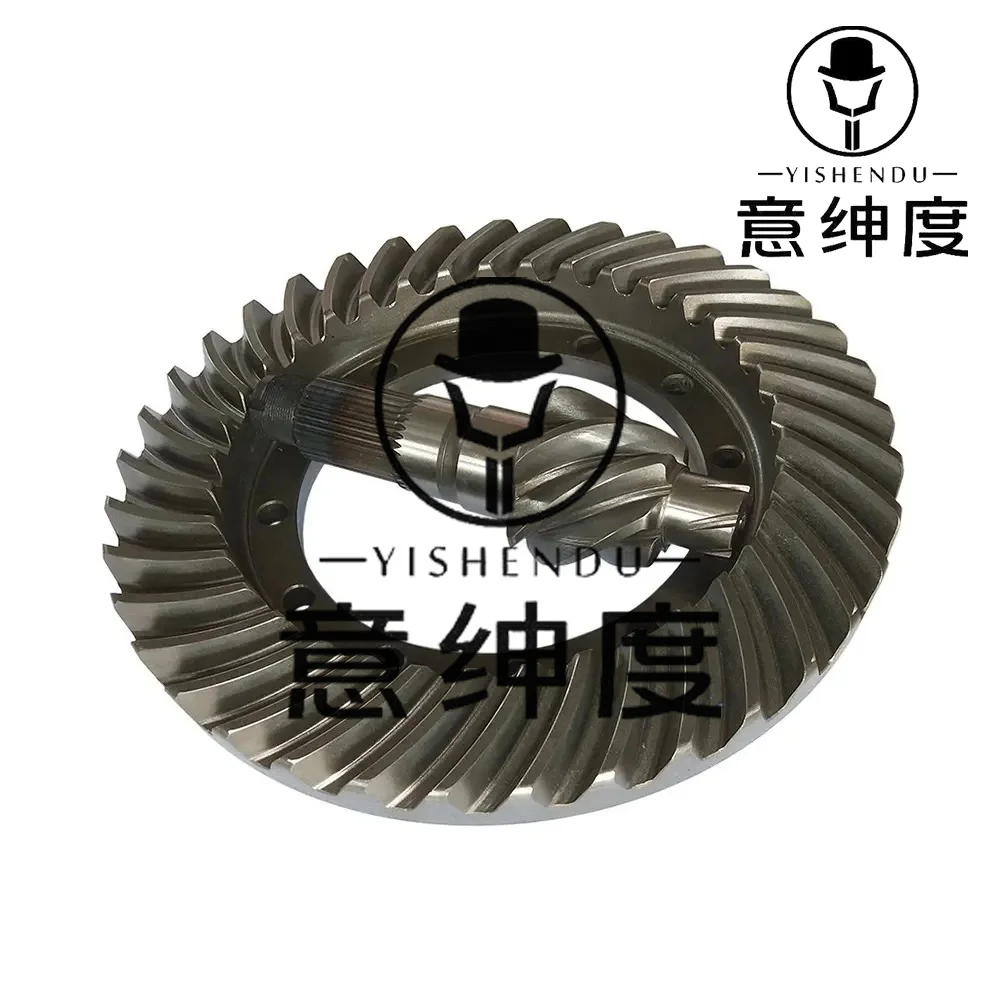
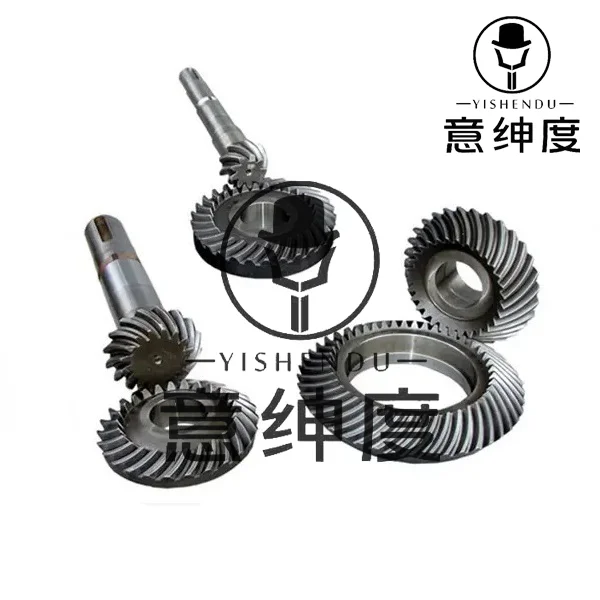
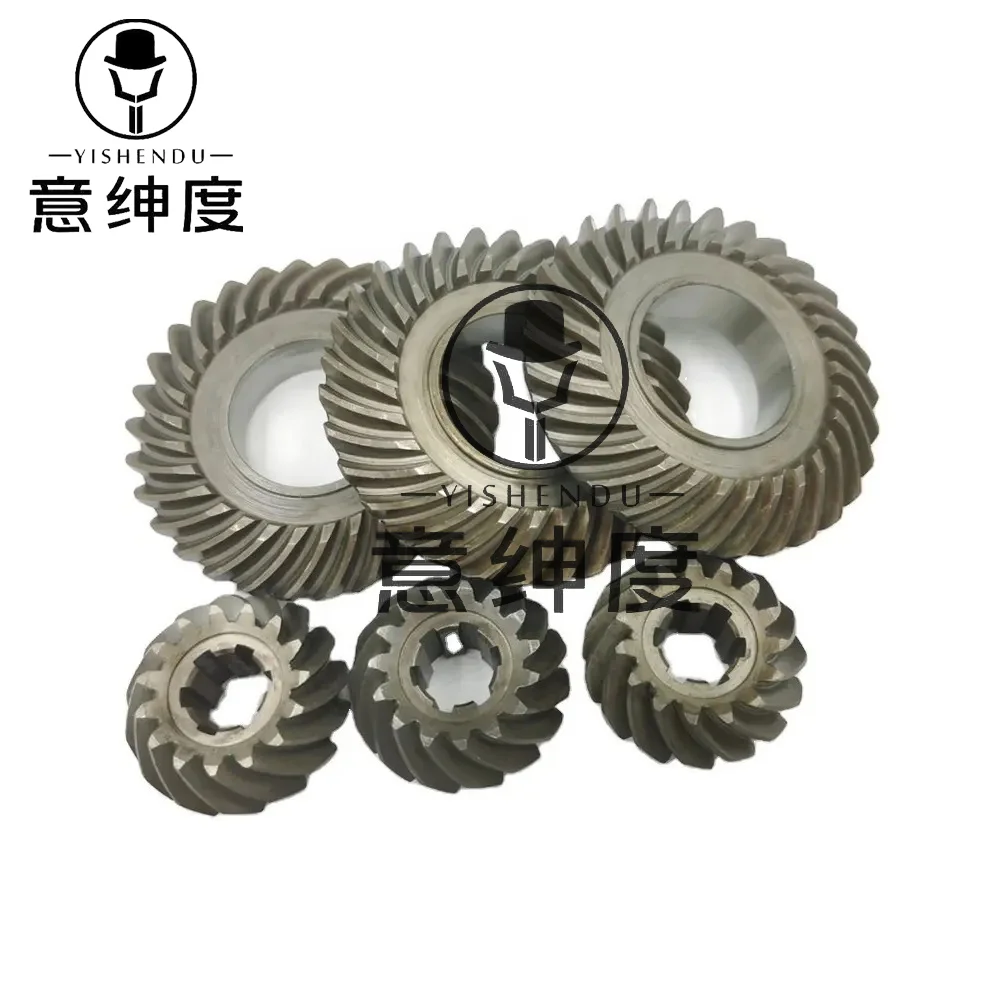
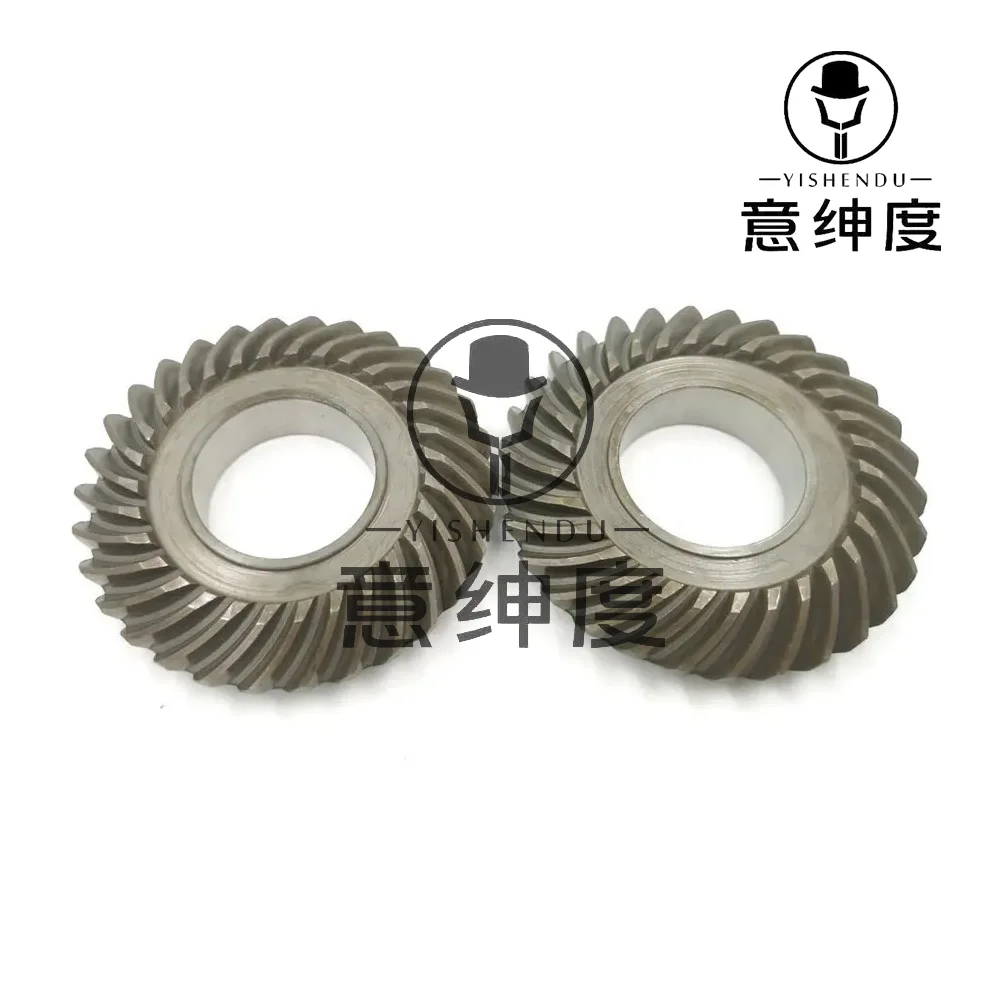
Spiral Bevel Gears have their teeth formed along spiral lines. They are somewhat analogous to cylindrical type helical gears in that the teeth are angled; however, with spiral gears, the teeth are also curved. The advantage of the spiral tooth over the straight tooth is that they engage more gradually. The contact between the teeth starts at one end of the gear and then spreads across the whole tooth. This results in a less abrupt transfer of force when a new pair of teeth come into play. With straight bevel gears, the abrupt tooth engagement causes noise, especially at high speeds, and impact stress on the teeth which makes them unable to take heavy loads at high speeds without breaking. For these reasons, straight bevel gears are generally limited to use at linear speeds less than 1000 feet/min; or, for small gears, under 1000 rpm.
Zerol Bevel Gears are an intermediate type between straight and spiral bevel gears. Their teeth are curved, but not angled. Zerol bevel gears are designed with the intent of duplicating the characteristics of a straight bevel gear, but they are produced using a spiral bevel cutting process.